Thursday, 14 July 2011

Lift the Lid: Dream Windows


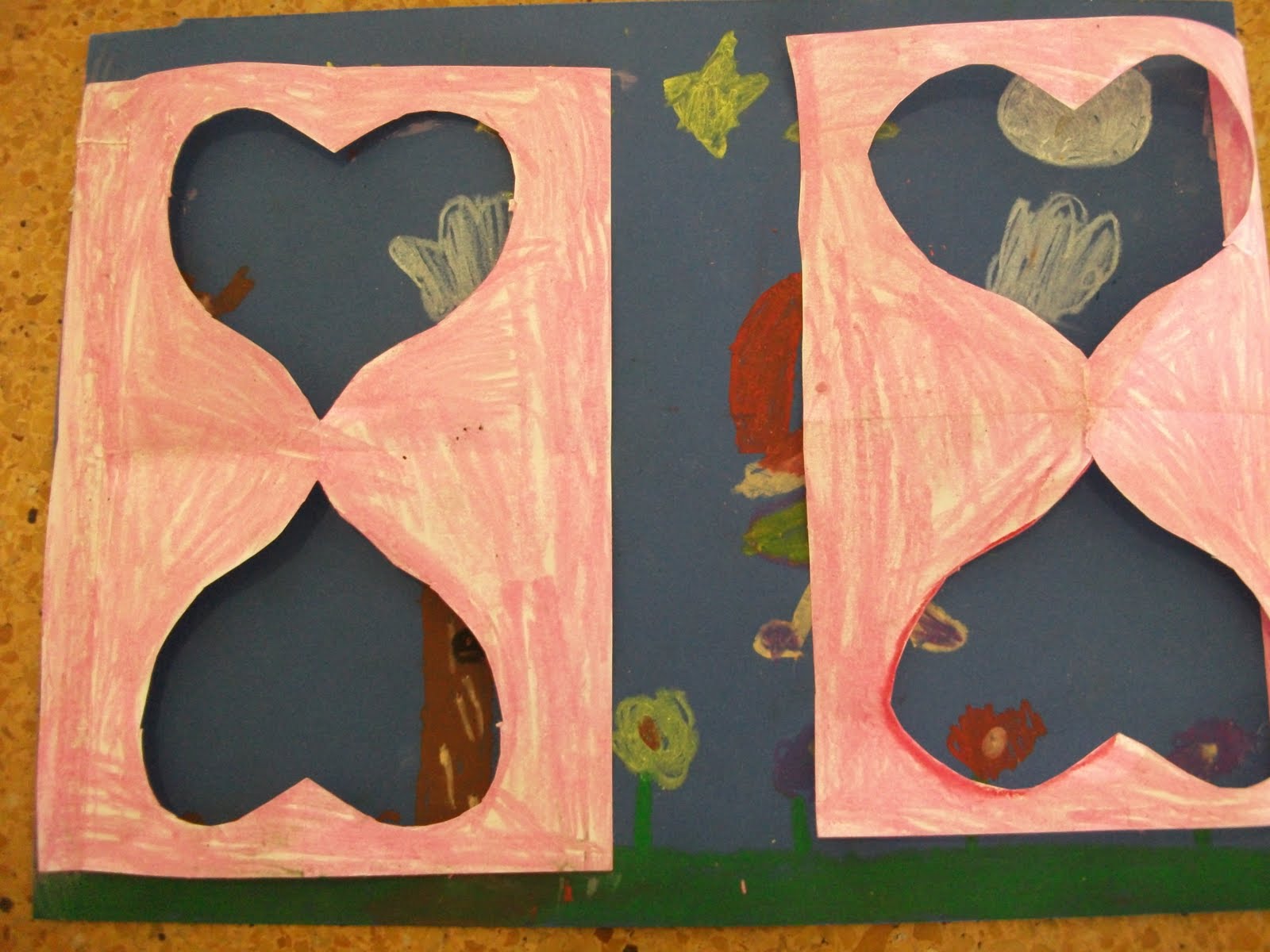
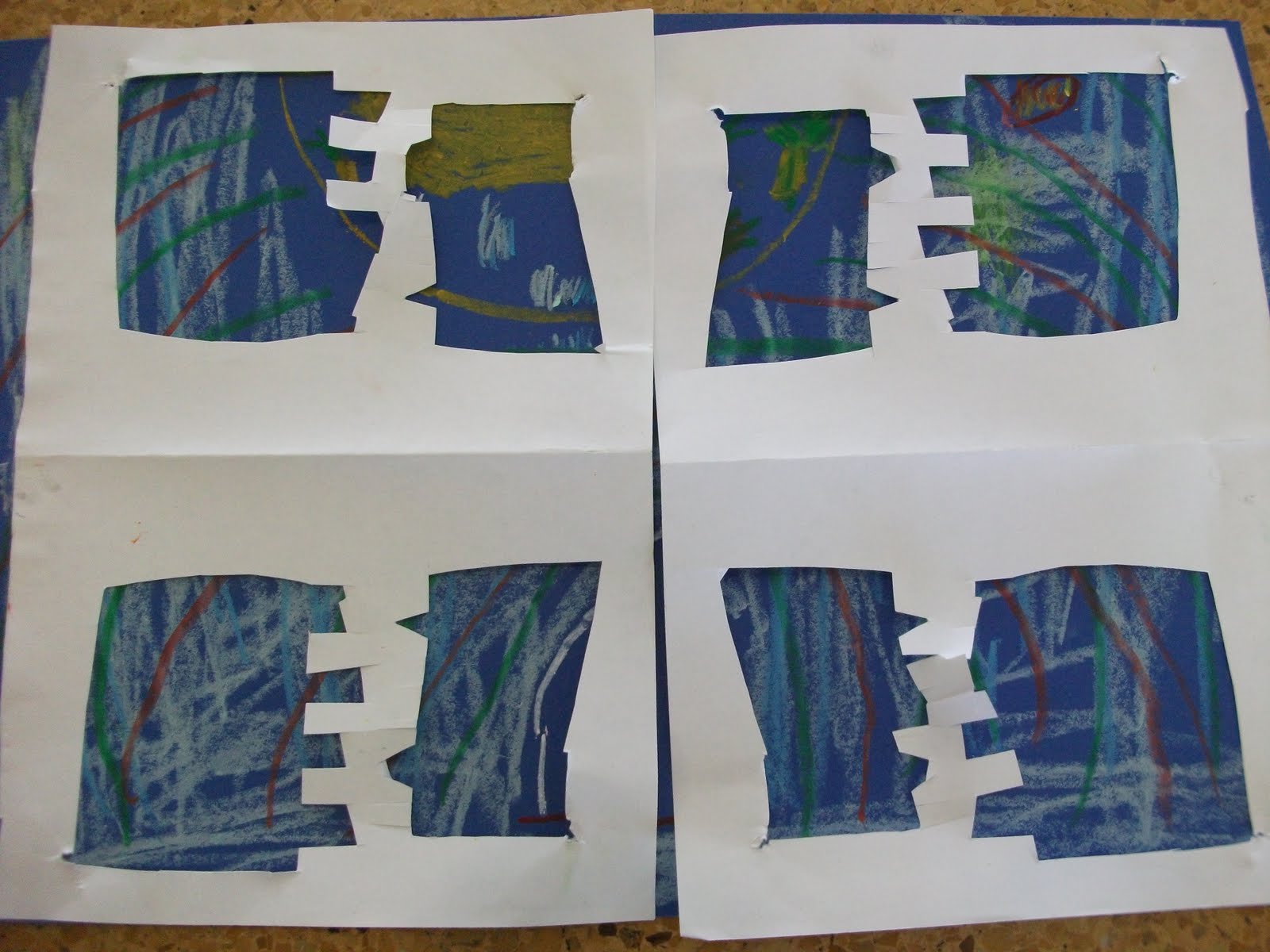
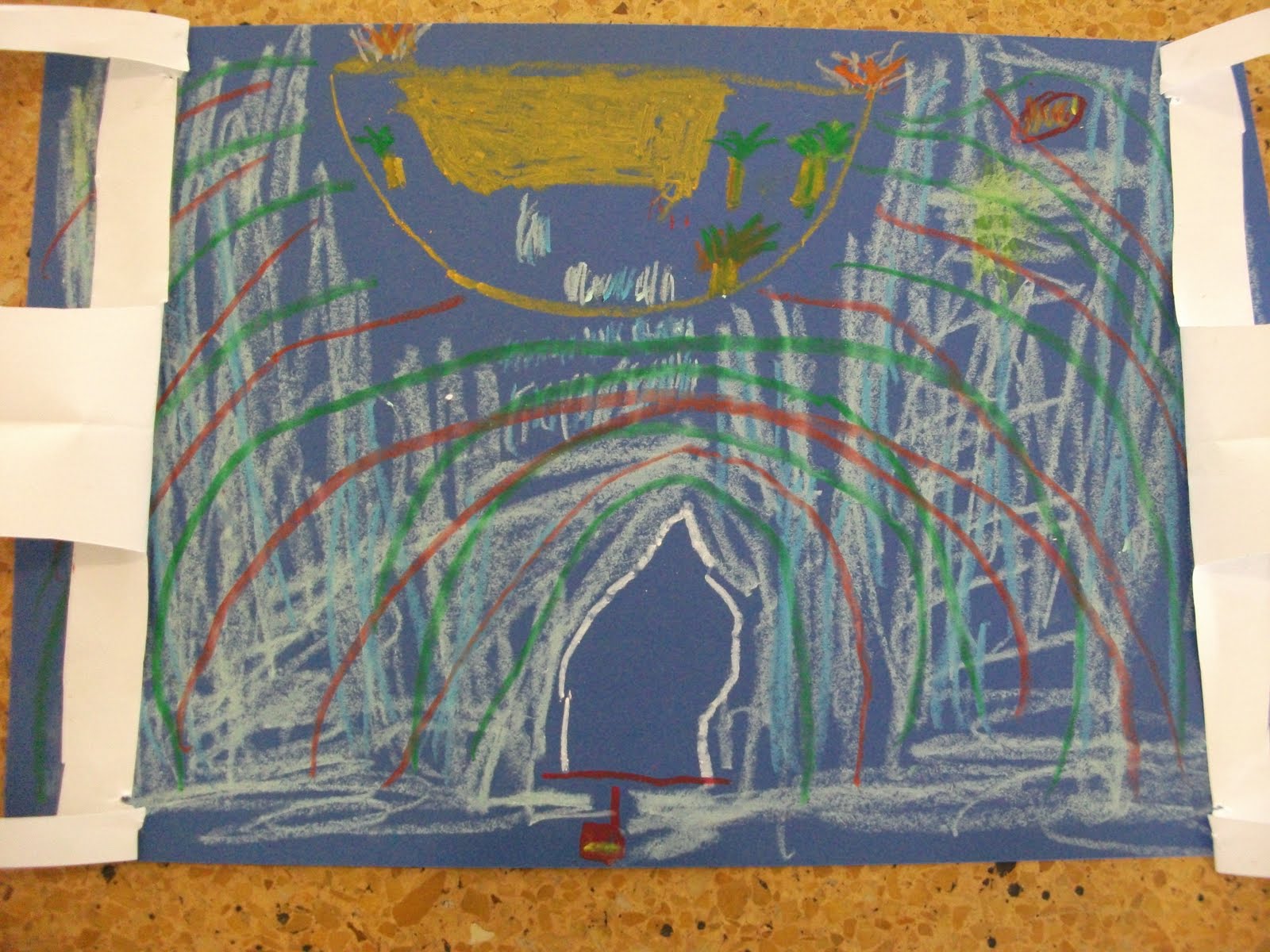
For this month's Lift the Lid we took our inspiration from the new exhibition of lightbox photos and films of Catherine Yass. The artist creates quite dreamy (perhaps even slightly nightmarish) experiences for the viewer. We echoed this work by creating " dream windows", imagining we were fast asleep, going to the bedroom window and recording the dreaming landscape we could see through it.

The first task was to draw the vision with oil pastels on deep blue paper. Then we folded and cut shapes out of white paper, cutting the resulting lattice into two window frames and sticking them to the edge of blue paper. When the windows were shut, you could see glimpses of the dream land through the cut-outs. When the windows were opened, the full view was revealed.


My team (Jess, Ben and Nick) and I had a busy afternoon with many family visitors producing beautiful artwork. We hope you enjoy the results. Unfortunately, we just don't have the space to include them all.


Sunday, 3 July 2011

Catherine Yass - colouring space

A lovely breezy summery seaside day and lots of families in for a play on DUNE and plenty in to see Copacabana - so a really mixed crowd. It was great to be able to link all the spaces - so that people who had been on the roof might have espied Sovereign Lighthouse and we'd talk about that, and it proved a great way to point them towards Catherine Yass's photos of it - and then if people had wandered in from the film in the gallery 2 could then be directed to telescope on roof and to her photos of in gallery 1.


Had some interesting conversations with pupils from Bexhill High School about re-painting the DLWP in their preferred colours - one suggestion was to cover it in graffiti and paint the inside pink and purple. Another suggestion was the addition of a sensory room with dolphins, furry animals and music plus an array of trampolines.
Inspired by Yass's use of positive and negative photography to create an atmospherically charged atmosphere we talked about how different colours influenced how we might in different coloured spaces. There was a collection of pictures of the DLWP to work with and the aim was to colour particular spaces in the building using colours that represented indivdual's response to the selected space.

Pre-school aged participants particulalry enjoyed cutting up coloured paper and inventing their own spaces whilst older ones used the coloured crayons in fits and starts whilst disucssing a vast range of topics. The most noticable thing was the degree to which people just sat themselves down and coloured furiously - enjoying the rich and varied colours available.


Wednesday, 8 June 2011

Lift the Lid: Colouring with Cage

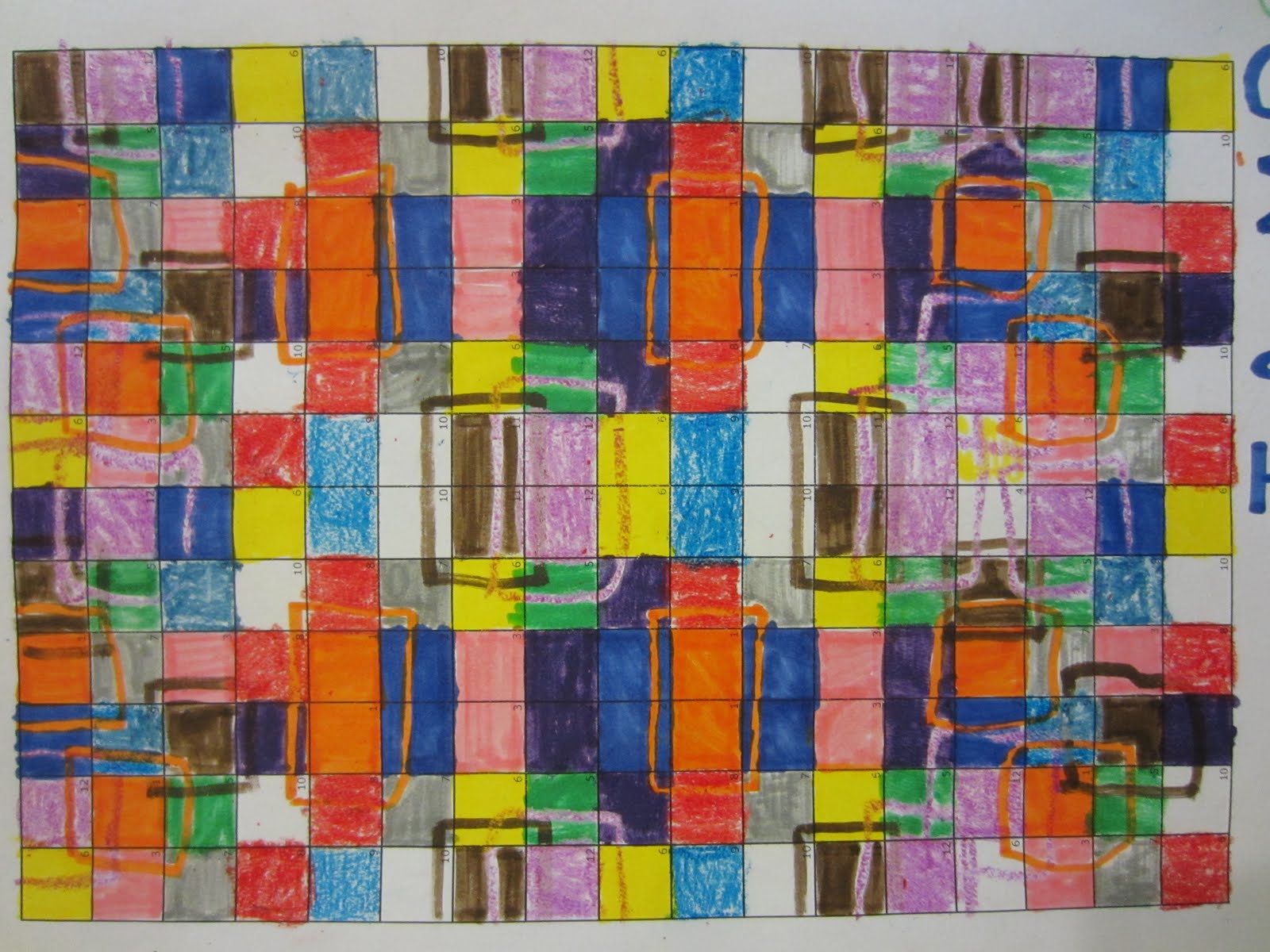
The very last day of the John Cage exhibition, and our second (and final) opportunity to open the box, get out the 12-sided dice and start colouring. It was a wet and windy day, which blew many families our way. But the despite the large numbers of small children, a remarkable peace reigned: everyone had their head down, concentrating furiously on colouring squares.


The ambient sounds were rolling dice and the scratching of felt pens across paper. It was a delight to see such diversity emerging from such a simple starting point, as many visitors experimented with making up additional colouring rules. This was Cage-style creativity in full flow. We ended up with images redolent of flower gardens, shimmering sun on water, maps, raindrops in sunlight, psychedelic cities, dissolving landscapes, and so on...


As a mother of three remarked, this is actually a relaxing way to make artwork - you don't have to think about it, you just play the game and enjoy it. There is no anxiety about whether you can draw what is in your head or not.
Most visitors went away with extra colouring grids, so they could keep on working at home.

The pictures above are just of selection of the fabulous array of images which bloomed during the afternoon . "Every day is a good day", including wet and windy ones.

Many thanks to my volunteers, Ben and Marcia, who, as well as being terrific assistants, got caught up in the process of making work as much as everyone else, with wonderful results.

Monday, 6 June 2011

A poetic journey with John Cage: Saturday 4th June


At first this Saturday promised to have a low rate of participation, as the gallery was extremely quiet and most of Bexhill was settling itself on to the beach to enjoy this warm and sunny day. My quest today was to develop the first workshop I'd led on the theme of creative text and the use of elongated writing tools in order to write from standing onto the surface of the floor. The objective was for words to become liberated from conscious control by this disconcerting means of writing and consequently to use the inspiration of Cage's approach to generate a new understanding and respect for the creative use of text.

I decided to frame areas within the larger surface of paper to connect with the way in which John Cage's art was hung at varying heights and amounts of space between each work. By focusing the writing to work in a defined area, the author might be prompted to explore the contrast of space and the patterning of words, as well as a literary content. The stimulus was to either create a personal title for a favourite piece within the exhibition, or to be drawn to one of the existing titles and to randomly take the word or words which stood out to the individual. This was the starting point for exploring an uncontrolled direction for a detached and yet personal expression of the original stimulus.

Despite an initial reluctance amongst the adult public, there were numerous young people who were not unwilling to take part, and some very interesting poetic journeys began to unfold.


My first family: Jasper, Louis,Ben, (and sister Flora), were extremely responsive to the concept of exploring an inventive use of text, with eloquent sophistication. Jasper, the youngest of three brothers, felt very strongly that a favourite print should be entitled "Stripey Snake" and created a beautifully spacious text to portray his new title.


Louis used the word "fire" to create a colourful and non linear atmosphere of the sensations associated with it.


Ben chose "Urban landscape" and created a dynamic text influenced by a sense of congestion, and the upright linear qualities of the man made world.


As the gallery began to attract more public, it was interesting to witness family members negotiating a collaborative approach with a respectful sense of equality. I really encouraged adults to take part to promote an integration of responses to encourage the influence of a child's inherent playfulness on the more considered response from an adult. Conversations on the theme of memory began to emerge from the words of the existing titles; "Stones" was very evocative for one gentleman who couldn't elaborate further than smiling as he enjoyed the reconnection. "Global Village" reminded a woman of the ceramic design that a very old friend of hers used to create and as such established a trigger of association.

A second Ben and his inspiration from "Rocks and Smoke"


Molly collaborating alongside her father Thor

Even if people didn't want to participate, it was interesting to have conversations which encouraged the observer to move backwards from the final artwork and examine the processes behind the content in order to gain more of an appreciation of the complexity involved in a seemingly simple image. One young woman admitted to being "blown away" by the way in which she felt that John Cage gave the viewer an opportunity to view space as a catalyst for playful and non judgmental creativity. Cordelia, a writer was keen to experiment with writing using the canes and enjoyed the surprise of words emerging on an unforeseen larger scale and differently to how she might have imagined.

Through exploring text, my activity encouraged a seemingly simple and direct connection to the nature of the random and the disordering nature of Cage's own processes of work. It was interesting to witness the range of interest at the idea of creative writing, varying from extreme mistrust, to willing and amused participation, where partners and friends were kept waiting whilst a carefree path of creativity was mapped out.


Above and below are examples by Shannon and Peter, a lovely couple who were inspired by the way in which the works within the exhibition denote a sense of space and patterning, to really play with the potential for text to take on a choreographic presence.

"Seven Day Diary" inspired Shannon's text to move in a variety of directions.

The last piece of the day created by sisters Diyanni and Nikilla drew the afternoon's activities to a wonderful circular close. Thank you to all who helped to map the afternoon's journey through the visual lines of John Cage.

"Circles" by Dyianni and Nikilla

Tuesday, 31 May 2011

Gallery Interaction with Sheridan Quigley: Setting the Rules


My second interaction for the John Cage exhibition continued with the I Ching-driven picture-making process that I detailed in my earlier blog: "Playing games to make pictures".

It was a quiet, chilly afternoon, which meant that my interaction visitors were inclined to settle in for while, throwing coins, plotting hexagrams and drawing around stones, from anything between half an hour to one and a half hours. The comment that was uttered most regularly was " this is really hypnotic".

The key idea behind Cage's approach is devising of a set of rules for making a piece and following them through to end of the rule set (eg 50 throws of the I Ching coins) or where a natural endpoint seems to arise (eg there are sufficient marks on the paper). My interaction provided the initial parameters for creating an image - it was then up to individuals to add their own components. This is where it gets interesting - working within a very narrow set of parameters, each individual's own set of additional rules resulted in a unique and personal piece of work. Examples included:
  • following a sequence of colours and using a single stone which is rotated a quarter turn each time

  • blocking-in colours and differentiating overlaps

  • drawing each contour twice, shifting the second one to the right

  • only drawing round contours which appear within the boundaries of the chosen cell; then drawing in cell boundaries to make enclosed shapes

  • drawing contours which only appear outside the chosen cell, leaving the cell blank; then emphasising the empty space by colouring in the overspill (annoted with the hexagram name - in Chinese)

  • highlighting the most central grid axis within each contour

Aside from visitors who wanted to engage with the process of making pictures, there were a number of people who just wanted to chat about their responses to the work on show. A common issue with encountering Cage's images was the need to look for meaning, and failing to find it, leading to bafflement and frustration. The human brain seems to be wired up to seek connections and subtext. With Cage's work, you can either decide to attach your own interpretation to the marks or just revel in the playfulness of devising a game and going with the flow - be it exuberant or meditative.